
Imagine quoting a pair of gate leaves. You allow four hours for fit-up and welding, price the steel and send the number. By handover, you have also made a supplier run, dressed the welds and taken the gate back to site. Which line on the quote paid for those hours?
Put the hours against the work
For an illustrative small job, allow one hour to measure and collect steel, four hours to fit and weld, two hours to prep and finish, and one hour to deliver. That gives eight labour-hours. At an example shop selling rate of EC$100 per hour, the labour portion is EC$800. Quoting only the four bench hours leaves EC$400 of work unpriced before you buy a hinge or a cutting disc.
Check what your hourly rate already covers
List the steel, hinges, latch, finish and job-specific expenses. If you charge a shop rate that already covers overhead and profit, use that basis consistently. Adding the same overhead again will inflate the quote. If a return visit depends on site readiness, write down that assumption so you can explain the range to the customer.
Use the estimate again after delivery
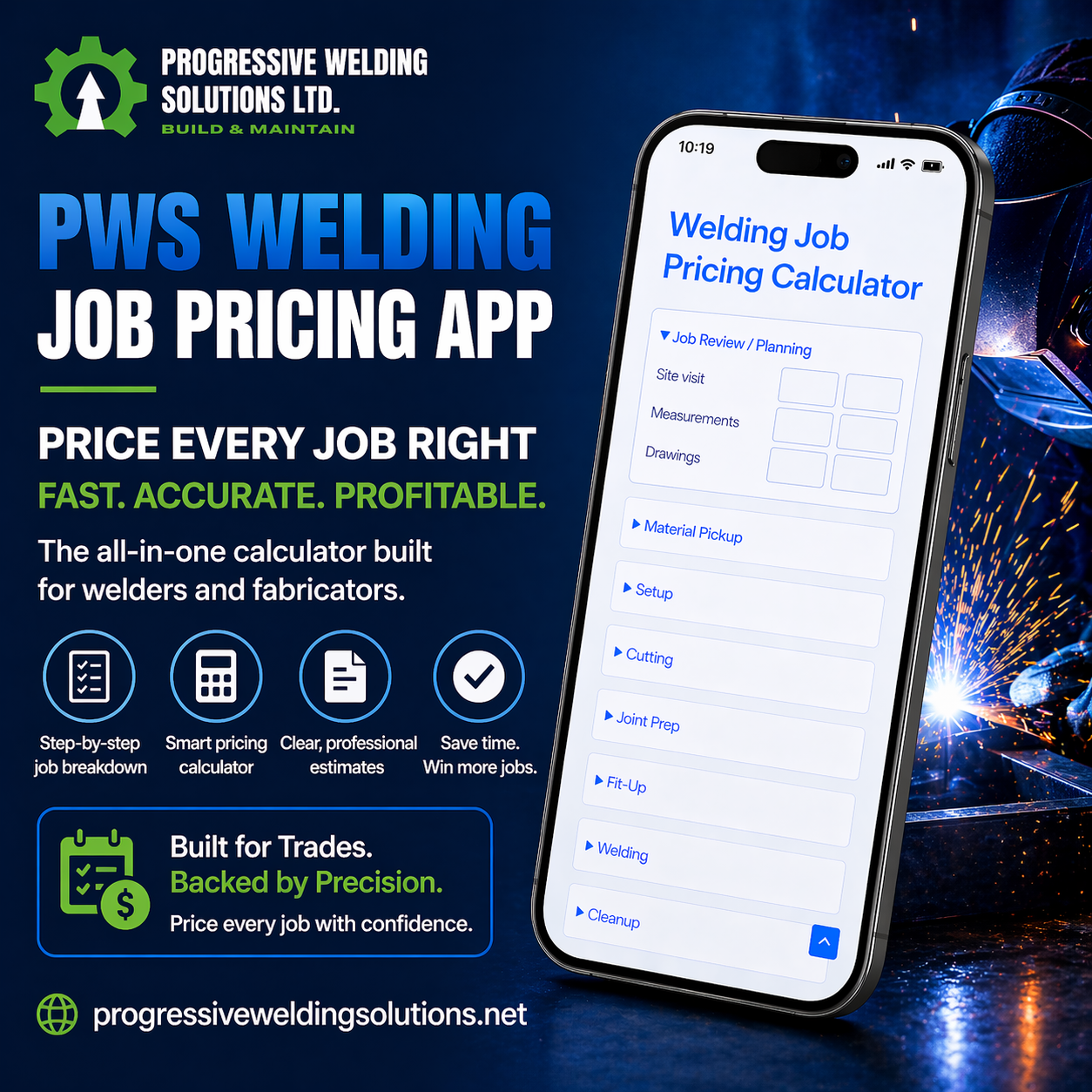
Enter your hours and expenses in the PWS Welding Job Pricing App to see a low and high selling price. Keep a copy of the estimate, then compare it with the time the job actually took. If finishing took three hours on this pair, you have a better starting allowance for the next one.
Price your next job with the PWS Welding Job Pricing App.
