
For a small fabrication shop, the useful question at the end of a job is simple: did the work earn enough after the actual workshop and installation costs?
A paid invoice does not tell the whole story
You finish a railing, receive the balance and move to the next job. But did the work earn what you expected? Extra installation hours, replacement hardware, transport and rework can quietly change the result. A job profit review brings those costs together while the details are still fresh.
Start with the agreed revenue
Record the original contract and approved change orders separately. A deposit is money received against the job; it is not extra revenue on top of the agreed selling price. Keeping those figures separate prevents a healthy bank balance from being mistaken for a profitable project.
Compare estimated and actual costs
List materials, employee labor, consumables, outside services, delivery, installation and the overhead allocated to the job. Enter quantities and unit costs for both the estimate and the actual work. Keep rework visible so you can see whether the loss came from an allowance, a production problem or a scope change.
A worked example
Suppose the contract is $6,000 and approved changes add $400. Revenue is $6,400. If recorded costs total $4,740, job profit is $1,660 and margin is about 25.9%. If the customer has paid $3,000, the outstanding balance is $3,400. Payments change that balance; they do not change the profit calculation. Use one currency and a consistent tax basis throughout.
Use the PWS tracker
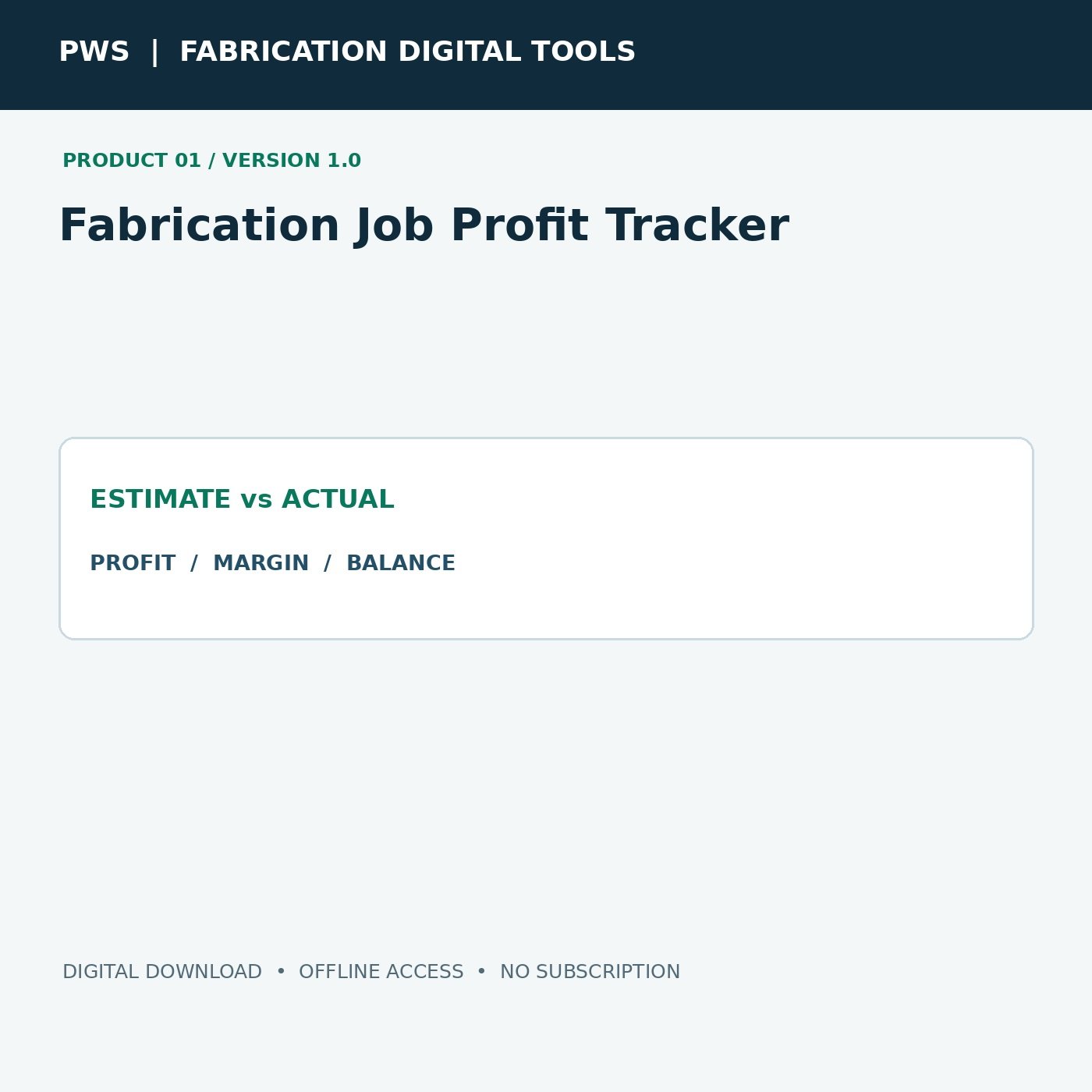
The PWS Fabrication Job Profit Tracker shows estimated costs, actual costs, profit, margin, markup and customer balance in one browser app. Save an editable JSON backup, export the cost report to CSV, or print a PDF. The sample job lets you inspect the calculations before entering your own figures.
Avoid double-counting overhead
If your labor input already includes overhead, do not add that same overhead again as another cost line. If you use the direct employee cost per hour, record the appropriate overhead separately. Review any outstanding purchases, remaining labor and subcontract bills before treating the result as final.
Build a repeatable review habit
Review each completed job, then carry the lesson into the next estimate. One job might reveal a missed delivery allowance; another might show that installation took longer than fabrication. The goal is a clearer decision next time. This is a job-management tool, rather than a complete company accounting system.
Explore the download
PWS Fabrication Job Profit Tracker is listed at US$29 as a one-time digital download. Read the product page for the files, compatibility and scope included. Extract the ZIP, open START-HERE.html and keep backups of your work.
Explore more PWS digital products.
