
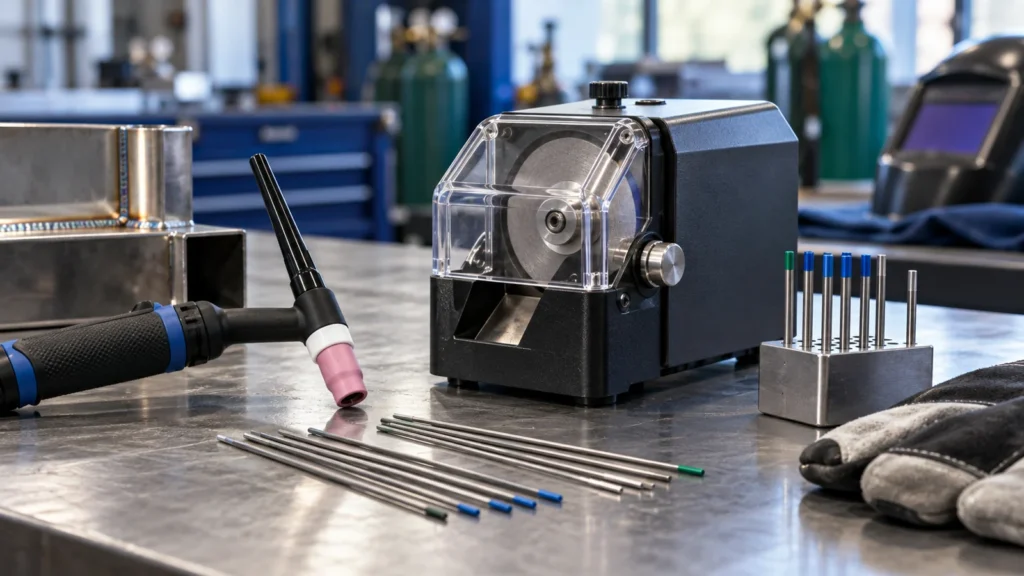
A tungsten grinder is useful only if it supports the electrodes and preparation you actually use. Before choosing one, identify your TIG process, electrode type and diameter, and the preparation guidance for your equipment. A tool’s adjustable angle is one feature, not the entire specification.
Start with the welding setup
Record the material, current type and range, tungsten type and diameter. Check the welding machine and electrode manufacturer’s guidance for the preparation intended for that combination. Different equipment and applications can call for different tip arrangements.
Miller’s TIG welding basics guide explains that tungsten selection and preparation affect the welding result. Use that principle to organize the questions, then follow the instructions for the equipment and electrodes in your shop.
Check what the grinder actually supports
Compare the permitted electrode diameters, angle range, abrasive type and replacement-wheel availability. Ask whether the tool provides a consistent electrode guide and how it handles short pieces. Confirm whether the stated angle refers to the included tip angle or a different adjustment reference.
For a cordless tool, review the battery arrangement, charging requirements and what is included. A low purchase price is less useful if the replacement wheel or required accessory is difficult to obtain.
Keep contamination in the preparation plan
Tungsten that has contacted the weld pool needs to be dealt with according to the electrode and process guidance. Do not assume a quick touch to any workshop grinding wheel restores the intended condition. A dedicated, compatible preparation setup helps keep the method consistent.
Review how the tool manages grinding debris and how its instructions address the electrode types you use. The procedure should include the manufacturer’s handling and dust-control requirements, rather than leaving those questions until the tool arrives.
Compare a product with your requirements
The PWS Store lists a cordless TIG tungsten grinder and sharpener kit. Read the current specification, supported sizes, adjustment details and included accessories before ordering. The listing should be checked against your actual preparation needs; it is not an automatic fit for every TIG application.
You can also explore the PWS TIG settings tool. Review the tool’s supported inputs and reference scope, then check the result against your equipment and process requirements.
Make preparation repeatable
Once the appropriate method is settled, keep it with the job or shop procedure: electrode identity, size, tip preparation and any relevant notes. Repeatable preparation is easier to evaluate than changing the grinder, tungsten and machine settings together whenever the arc behaves differently.
